


The star has handed over the entirety of his twenty-five thousand pound Mercury Prize cash to the Music Venues Trust, which operates to protect the United Kingdom's grassroots live music spots.
The star was awarded the cheque on mid-October as his new release People Watching was named the outstanding release of the last 12 months.
He has opted to hand the money over to the Music Venues Trust, in recognition of the crucial part small stages had in his beginning days.
"As an artist would not have achieved this success if it hadn't been for all the shows I performed around the area, and further afield, when I was starting out," remarked Sam Fender. "These venues are iconic, but they are struggling."
From early 2023 onward, more than 150 of these spaces have permanently closed – about 16% of the entire UK sector.
Recently, well-known musicians like Pulp, Coldplay, Katy Perry and Ed Sheeran have all aided the MVT in its attempts to keep the scene afloat, by applying a small levy to their ticket costs, which supports independent venues.
Fender also joined in, collecting more than £100,000 on his live tour to assist 38 grassroots venues across Britain.
The donation supported venues that were confronting possible closure due to challenges stemming from water damage, fires and personal losses, as well as permit problems, court cases and neighbor objections.
Other venues obtained funding support in improving facilities and technical equipment that directly benefitted performers and audiences.
"The concept that revenue from performances in big venues helps the smaller venues, where it kicks off for musicians like me, is just common sense," Fender has stated.
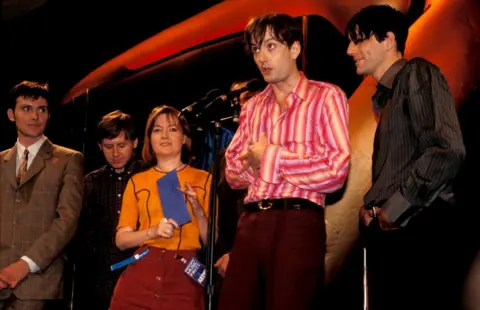
The musician is not the first artist to donate his Mercury Prize winnings to good deeds.
In Pulp received the award in the mid-90s for their release Different Class, lead singer Jarvis Cocker declared that the group would give their cash to the organization the charity.
During 2002, artist the artist shared her prize among several organizations, like the NSPCC and a charity for Sickle Cell.
"I also contributed a grand to Highgate Newtown, to their gymnastics class, because I practiced gymnastics when I was a child and they needed better apparatus," the artist told a publication.
Previously, the band donated their prize money to the local youth club that developed their act, in addition to other grassroots music organisations.
Also 1994 winners the group gave their winnings to a multiple sclerosis charity after a acquaintance was diagnosed the condition.
"Receiving the award was ample," remarked singer Heather Small. "The prize was the bonus but we didn't need the bonus, because we had the honor. So our victory impacted somebody else's life."
Last week, the MVT announced it had rescued two grassroots venues in south-east England, by bringing them into community ownership.
One venue in Southampton and The Croft in Bristol were acquired under the community ownership initiative, which is supported by a national body and supporters who buy "shares" in the buildings.

